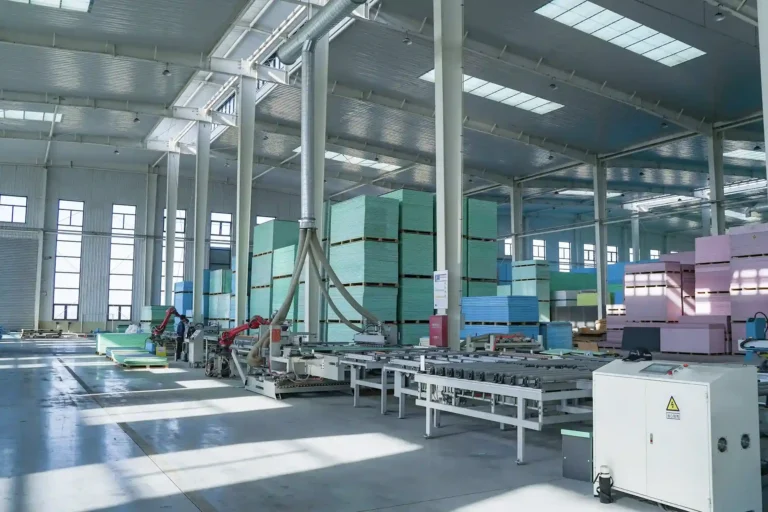
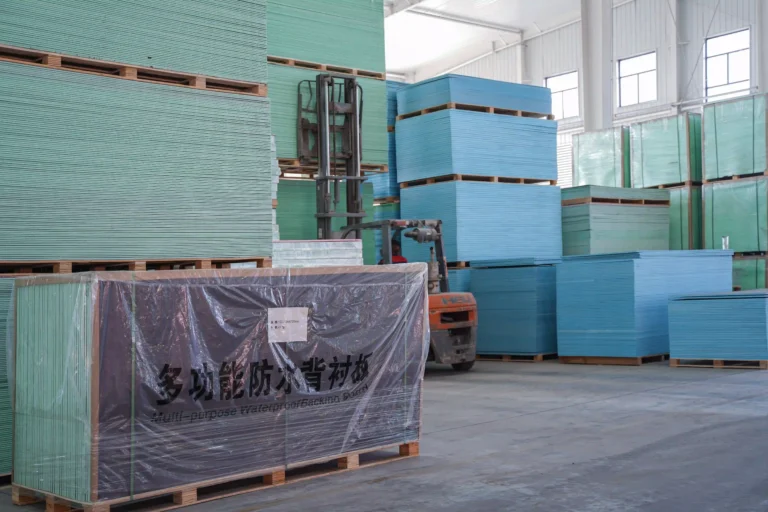
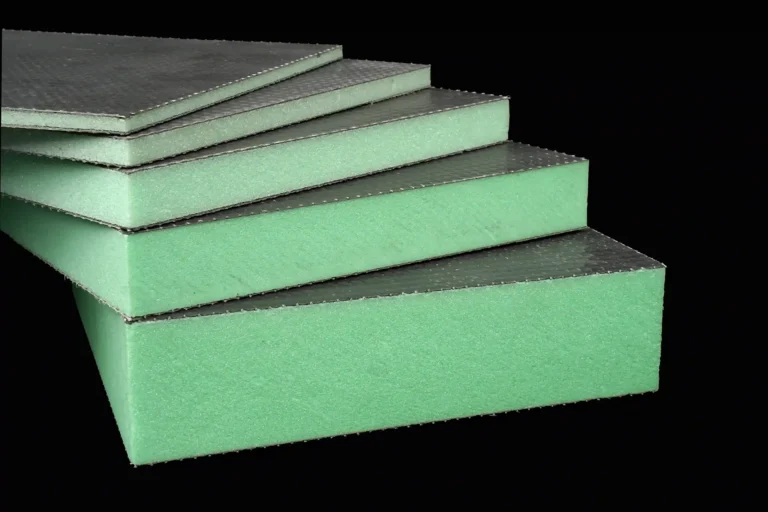
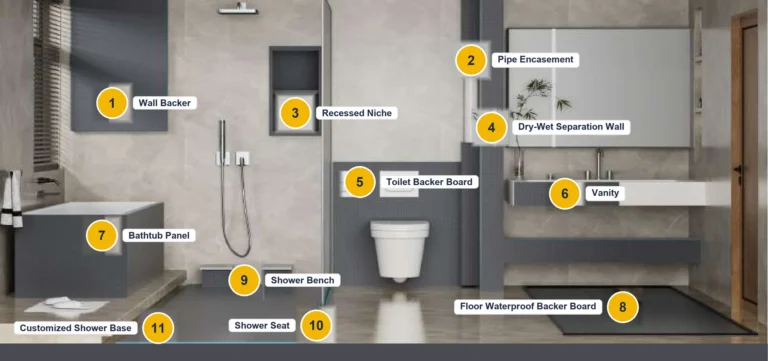
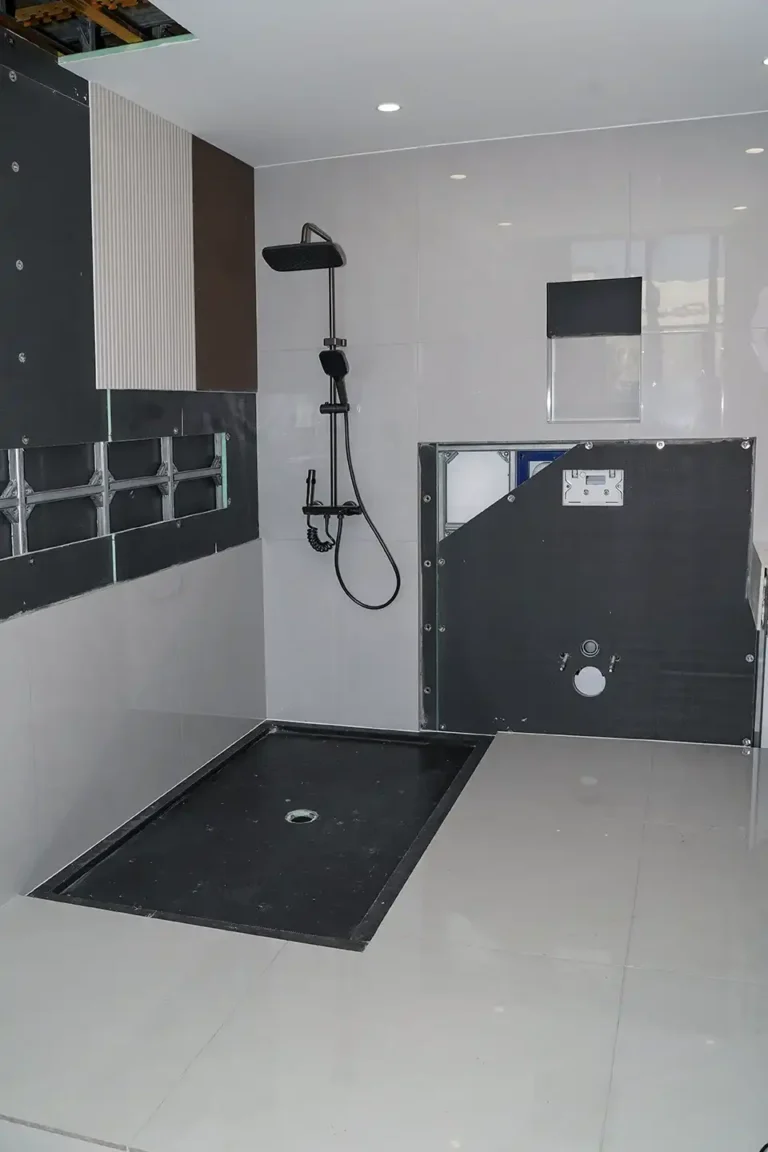
For many shower and wet-room projects, XPS tile backer board is the lighter and simpler system to install. The board is waterproof, and sealed joints, corners and penetrations complete the system. Cement board normally requires a separate waterproofing layer. The right choice still depends on the substrate, project specification, local code and the crew’s installation experience.
Weight: The Number Nobody Checks
Board weight varies with thickness, coating and sheet size. What matters on site is that XPS backer board is substantially lighter than a same-thickness cement board, especially when panels must be carried upstairs or fixed overhead. Confirm the current board-specific weight before using it in handling or load calculations.
Waterproofing: Built In or Added On?
Cement board resists water, but water still passes through it slowly. So a cement board shower needs a membrane over the top, with every corner folded and sealed. Every rushed seam is a leak waiting for its second year.
XPS board has a closed-cell core. Factory data reports 0.8% water absorption by weight after 96 hours of immersion. The board itself is waterproof; joints, corners, fasteners and penetrations must then be sealed with the specified system components. Once that system is complete, no separate sheet or liquid waterproof membrane is normally required over the board face.
Cutting and Dust
Cement board: score, snap, then grind the edges. The dust is silica, and silica dust on a job site is a real problem.
XPS board: score and cut with a utility knife for a clean edge and significantly less dust than cement board. If power tools are used on the cementitious surface, appropriate dust control is still required. On repetitive bathroom projects, easier cutting and handling can remove repetitive installation steps.
Where Cement Board Still Makes Sense
Fire-rated walls and areas around fireplaces: the specification usually calls for cement board, so use it. Some installers also prefer it under heavy natural stone slabs. The goal is not to remove cement board from every job. It is to stop using it by default in rooms where it adds a membrane, a trade, and a day of labor you never needed.
So Which Board Should You Order?
Showers, bathrooms, wet rooms: XPS tile backer board. Fire-rated walls or heavy stone: cement board, as specified. If you are unsure about a specific project, send us the drawings. We answer within one working day.
Decided on XPS? Before you order, see the seven questions a UK buyer asked us first — and the test numbers behind every answer.
Torn between XPS and cement board for a specific project?
Send us the drawings — we will recommend the right system and put samples in the post.