
Grooved XPS Heating Panel 30mm
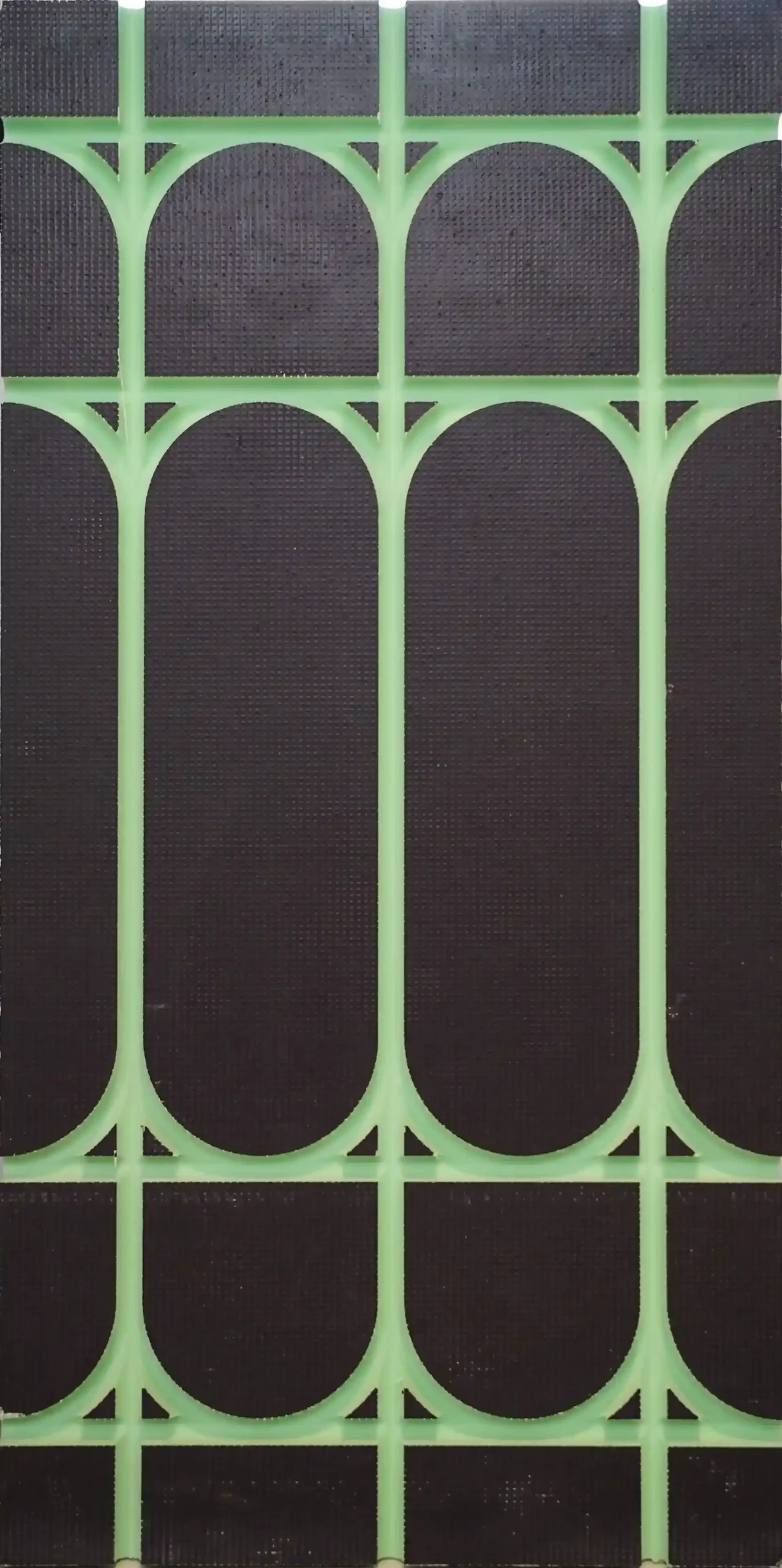
The no-routing option. A 30 mm XPS panel with straight pipe channels pre-cut at the factory — lay it, press the pipes in, screed, tile. The fastest way from bare slab to a heating loop that stays where you left it.
| Core: | High-density XPS |
| Thickness: | 30 mm |
| Channels: | Pre-cut, straight |
| Sizes: | Custom sheets |
Overview
Every hour of routing on site is an hour the room is out of service. That is the whole argument for this panel: the channels are already cut. A 30 mm high-density XPS sheet, straight grooves at a fixed spacing, pipes that press in by hand and stay put while the screed goes over. No router, no dust, no template.
The 30 mm thickness does two jobs in one sheet. It carries a proper groove depth for the pipe, and it keeps enough XPS under the channel to hold the heat in the screed instead of passing it to the slab. Same material family as our backer boards: 0.030 W/(m·K) thermal conductivity, batch-tested production, roughly 30% lighter than cement-based board. For a standard grid layout, it is the shortest path from delivery to finished floor.
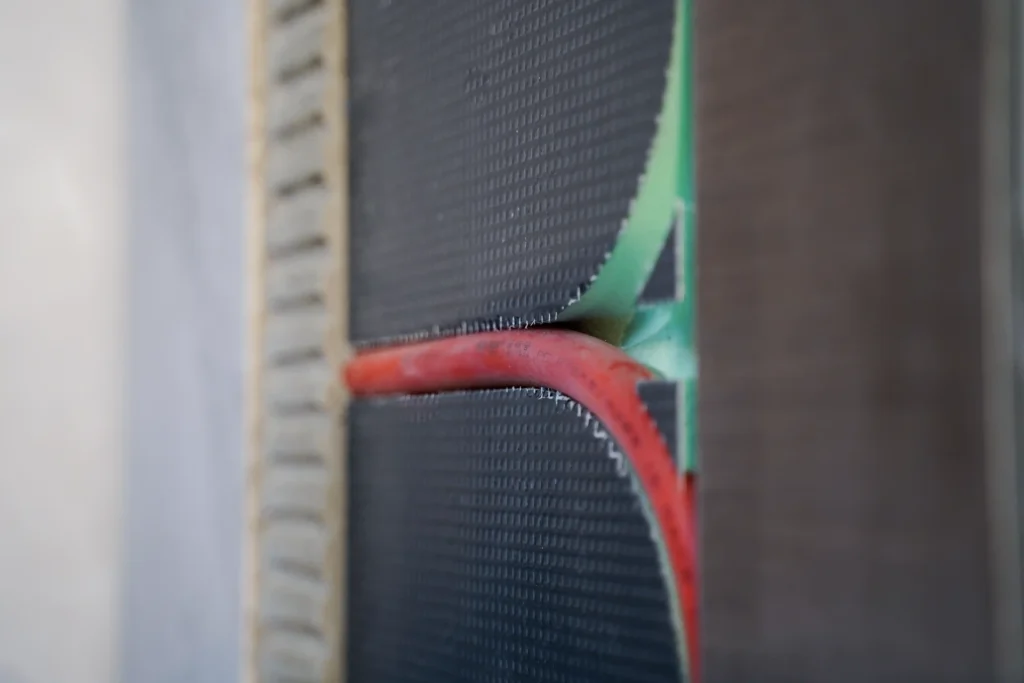
The sequence stays simple: level substrate, lay panels, tape and seal the joints, press the pipes into the channels, screed over with mesh embedded, tile when the screed has cured. Crews that have done one room can do the next one without a drawing in hand, which is exactly why distributors stock this version.
Where it is the wrong choice: a fixed grid cannot follow a custom loop plan. If the architect’s heat layout has spirals or tight return patterns, order the routed-to-drawing board instead. And if the build-up height is tight, the flat substrate board is the thinner road. This panel wins on standard rooms and simple grids, not on every floor.
Applications
Water underfloor heating in standard grids
Apartment and hotel floor refits
Distributor stock for heating installers
Screed systems under tile and stone
Fixing
Check the substrate is level before the first panel goes down — grooves keep their depth, not their patience. Lay panels tight, tape and seal every joint, press pipes into the pre-cut channels by hand, then embed mesh and screed over. Total build-up is panel plus screed per your system’s spec; send us the pipe diameter and we confirm the channel match before anything ships.
Complete the System
One material system, one fixing pattern — these usually ship together.