
XPS Pipe Boxing Board for Concealed Pipes – Waterproof & Tileable
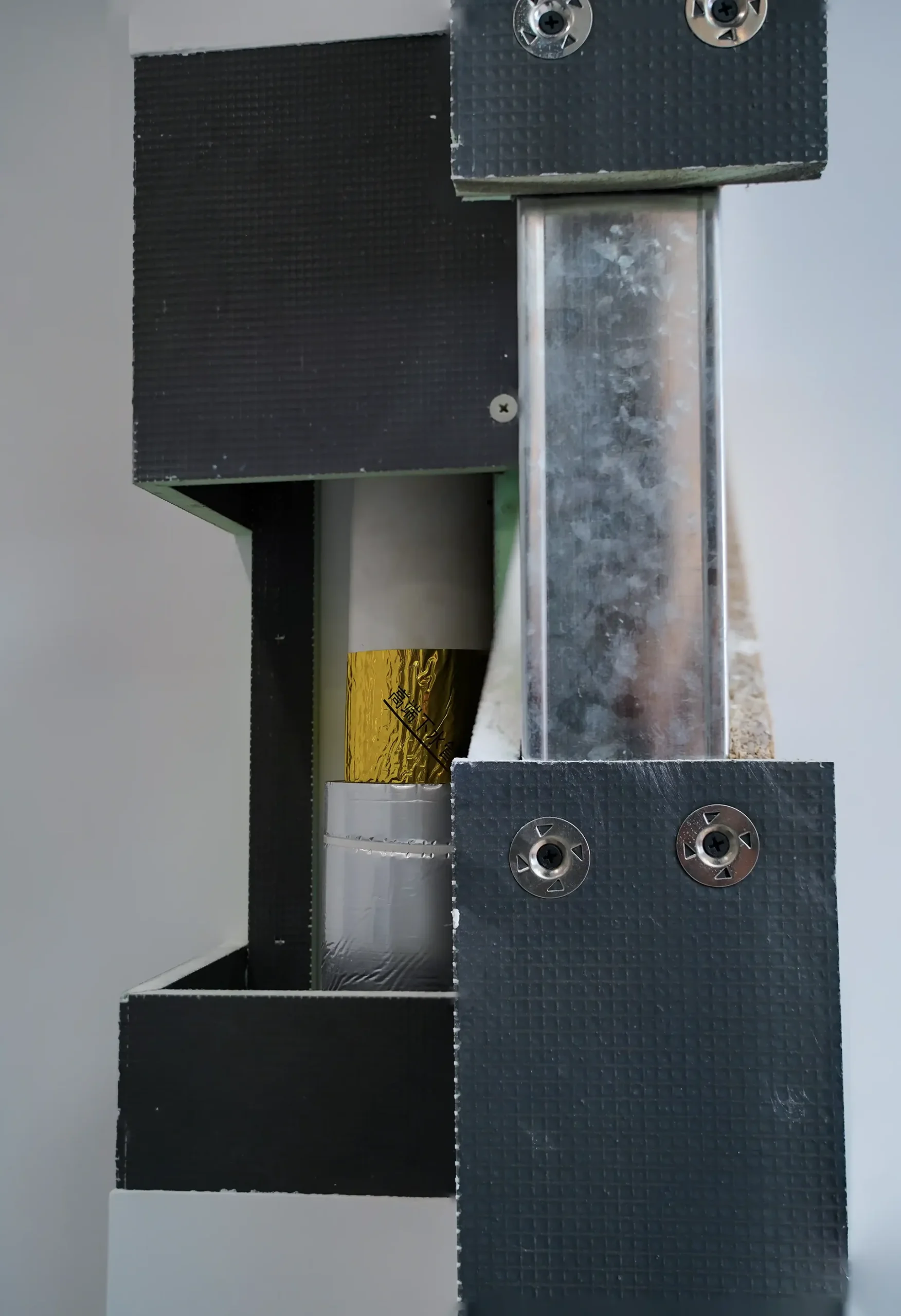
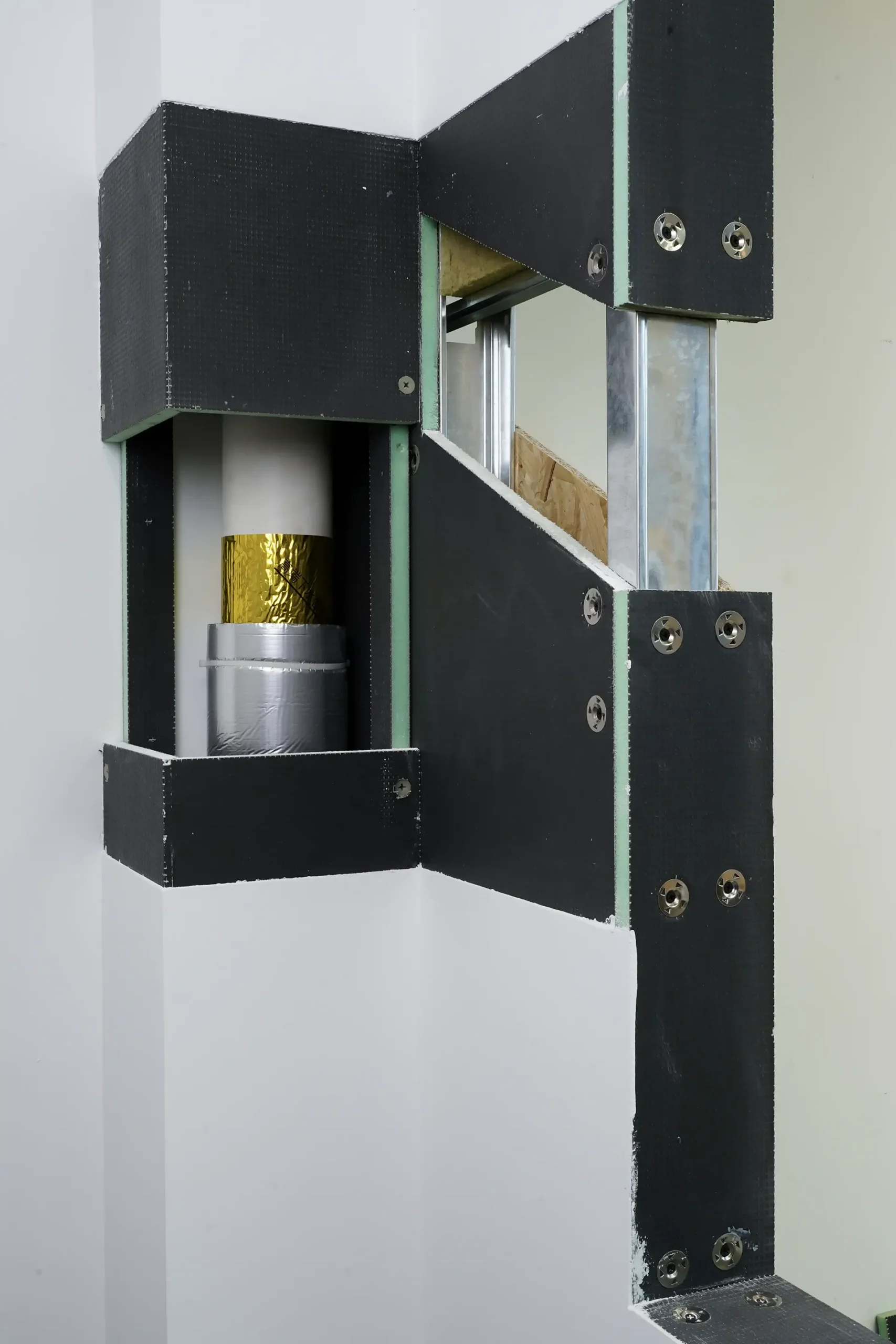
The pipe run, gone. Preformed L and U profiles or boards cut on site box in soil pipes and services, take tile directly, and give the space back that a brick-and-render chase would steal. Quieter than masonry, and a fraction of the weight.
| Core: | High-density XPS, coated |
| Profiles: | Preformed L/U or cut on site |
| Surface: | Ready for thin-set tile |
| Sizes: | Custom to your measurements |
Overview
The soil pipe in a bathroom steals space three times over: the brick chase in front of it, the render that levels the chase, and the days both of them take to dry. Box it in board instead and the same wall finishes in a morning, weighs a fraction, and tiles straight onto the coated face.
Two roads lead to the same box. For standard runs we supply preformed L and U profiles: two screws per flange, joints sealed, done. For anything the standard profiles miss — three pipes in one corner, a branch, a tight radius — boards cut and notched on site do the same job with the same knife the rest of the system uses.
The quiet part matters more than people expect. A coated XPS box dampens the rush of water behind the tile where a masonry chase transmits it straight into the room — the difference shows up at 2 am, not in the brochure. And because the box is part of the board system, it is waterproofed, sealed and flood-tested the same way as every other joint, with no separate membrane to buy or babysit.
One honest boundary: the box hides pipes, it does not service them. Build access where the plumber will need it — an inspection panel, a removable section, a hatch. A sealed box with no access is a time capsule of regret.
Applications
Soil pipe and waste boxing in bathrooms
Concealed cistern and supply pipe walls
Service chases in hotels and apartments
Spa plant rooms with exposed pipework
Fixing
Fix preformed L/U profiles to the background with screws and washers at the flange, or frame and board on site the same way. Bed every joint in elastic sealant with mesh tape, seal around penetrations, and flood test with the rest of the room before tiling. Leave the access panel unsealed until the plumber signs off.
Complete the System
One material system, one fixing pattern — these usually ship together.